This Track 4 D Day podcast discusses the work of D’Angelo and coincides with my recent article (Oct. 14/15) on his work and legacy.
The full article is on my Substack and the website.
This is an excerpt from the full article.
Analyzing Soul
The work of D’Angelo frames the tenets of neo soul. Along with the other three of the “founding four,” D’Angelo, Erykah Badu, Lauryn Hill, and Maxwell, the sonic profile shares similarities to those of Hip Hop foundations.
As stated elsewhere and well documented, the foundations of Hip Hop sound profile are noted as,
- The Message (meaning and intent; social-political identity)
- Community (association, collective engagement)
- Consciousness (expressed knowledge)
- Vocality (dynamic lexicon and historic-contemporary voice)
- Text (environment, space-place)
- Activism (agency)
Each of these is seen and manipulated in the works of D’Angelo through the neo soul genre. It is the balance of these sonic elements that gives liberty to D’Angelo’s style, where he, then, creatively maneuvers his compositions and covers without losing the connection to these foundations.
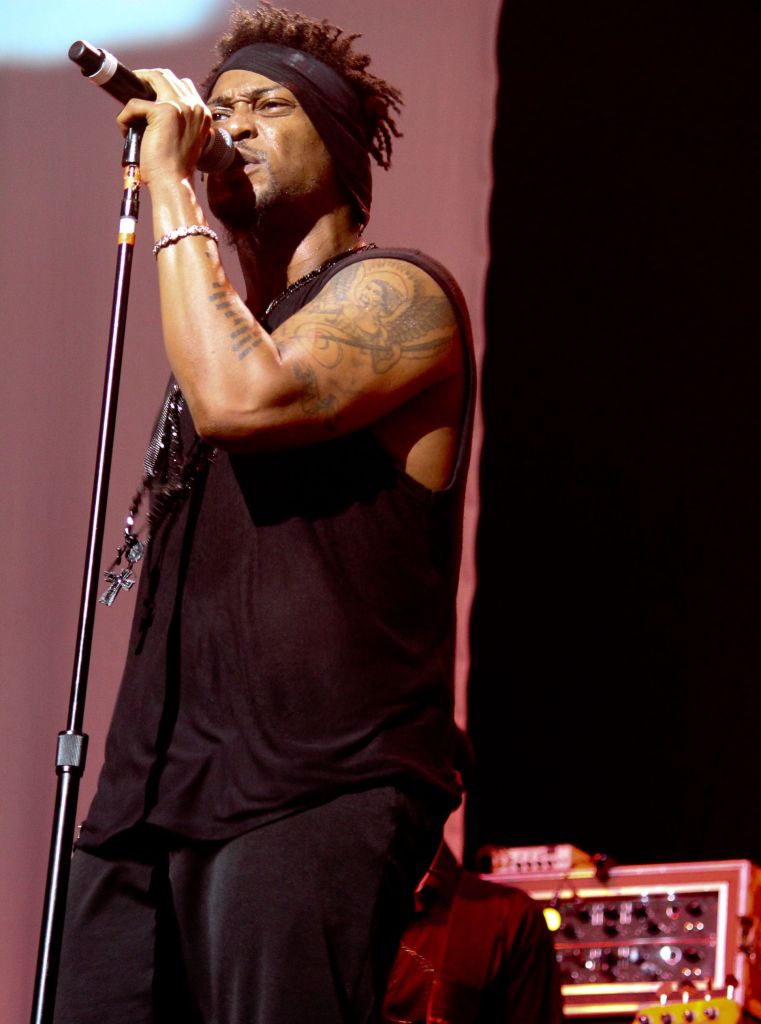
D’Angelo states his Message as one that inverts the stereotypes of the dominant, fearing Black male. Utilizing his body politic, D’Angleo profiles his Blackness in style, fashion, and near nakedness to invert cultural stereotypes of the weakening male and the feared Black body. D’Angelo promotes a Message situated in contemporary discourse that hosts cultural pride, balanced masculinity, and the illustration of self-security. Working as a measure of self-determination, this Message speaks to audiences (read: Black males) as one to be present in the culture, not the absent stereotype.
The Community for D’Angelo can be seen as a multi-ethnic context that favors Afrocentrism. Extending his application of Message, Community, for D’Angelo relates to a current Afro-plurality. D’Angelo operates to support the Black/African-American community, exemplified in drumming references to West African style and the closing track on the album Voodoo, “Africa.” These point to his valued interest in speaking to, not necessarily for, his Community, the expansive pan-African, contemporary diasporic, marginalized, racially troped Black/African/African-American lived realities.
D’Angelo’s Consciousness is widely expressed in his compositions, cover arrangements, and lyrics. Though building on the history of R&B, soul, funk, and Hip Hop, D’Angleo involves these elements without essentializing. The incorporation of historic-contemporary sonic elements, D’Angelo speaks to a broad range of socio-political issues simultaneously. This process makes his work sound fresh and current, long after the years of production.
In the area of Vocality, D’Angelo populates a span of styles from those he holds as his music heroes, Sly Stone, James Brown, Prince, and Marvin Gaye, to name a notable few. At times prolific, others subtle; clearly and rhythmically, then introspective and poised. Writers and musicologists speaking about neo soul qualify the soft, inner voice of the genre. D’Anglo embraces this aspect, while also enlisting sermonizing and paimfully joy-inspired mellisma. Positioning his lyrics before, on, and behind the beat, D’Angelo moves the reviewer from a passive to an active listener. Such a technique localizes his singing and rap style in alignment with his noted musical heroes and others who captured this ability — Billie Holiday, Aretha Franklin, Bob Marley, Black Knowledge, Mos Def, et al.
The Text of D’Angelo’s work challenges reviewers. His stage presence follows that of the great funk and R&B artists, while playing equally in a singular space hyper-focused on the individual.
The minimal use of the narrative music video, D’Angleo, has some selections that are only a cover image. This works to position the reviewer in a space-place to holistically engage the work rather than rely on a visually suggestive prompt. In other situations, D’Angelo will expose his physique to challenge the reviewer to remain connected with the sonic landscape while being visually stimulated.
As stated earlier, D’Angelo positions his body politic as one challenging cultural and racial stereotypes. D’Angelo explores both visually active and static texts, keeping the reviewer engaged in the totality of his work, a technique which writers and musicologists discussing neo soul have noted as the archetype of the album as a composite text. Through this process, D’Angelo works on both the macro and micro levels. He scripts the arc of his albums to embrace active and static moments. The narrative of his works, then, functions either as a single track or a full document. A listener will not be left absent of any intent, meaning, involvement, or silent voice throughout the balance of the text.
In Activism, D’Angleo did so in an unorthodox manner; he took his time working on an album. This process is his activism. In doing so, D’Angleo was able to speak to important socio-political issues and prompt dialogue about these issues. Activism is the culmination of all the founding elements of Hip Hop analysis. In the artistry of D’Angelo, his activism expands all areas where he situates his work.
Being comfortable with promoting quality over quantity is a lost technique in the current fast-paced, market-saturated, globally exploitive music industry complex. This speaks to the activism of D’Angelo; he operated outside of the global music industrial complex’s definitions. Few artists in any genre had the ethos, financial sustainability, or record company backing to conduct such a process. Those who elect to follow this agenda normally do so at the sacrifice of their record deal, monetary loss, and sometimes fade into obscurity.
D’Angelo was able to work beyond these limitations to produce a short catalogue, but one drenched with activism, from the individual tracks to the recording process and market release. This underscores D’Angelo’s activist bone, which he was not afraid to hold steady. The short-term agency may be less secure. The long-term agency brings an additional level of attention to the work of an artist.
For D’Angelo, his consciousness of the current socio-political environment may/may not be ready for new challenging work. Still, D’Angelo, as a musical agent (read: energizing component to advance the work of the unspoken), was able to speak for multiple levels of change. D’Angleo’s activism could be seen in his simple appearance through a full-length work or recording. D’Angelo’s complete corpus is his activist profile. The agency of his work is the investment in culture to engage his work once exposed. He need not conduct any other means of activism beyond his recordings, cameo stage presence, and efforts as a cultural communicator and educator.
D’Angelo, Untitled (How Does It Feel) (Official Music Video), Posted February 2009.
D’Angelo, Playa Playa, links to the full album, Voodoo.
Lauryn Hill, Nothing Even Matters feat. D’Angelo, posted March 2010.
Alan Lechusza Aquallo
Share, subscribe, follow, and comment.
 alan lechusza aquallo
Leave a comment