An article published by South Dakota News Watch on September 10 brought thoughts and interest. The article discusses the Lakota Music Project.
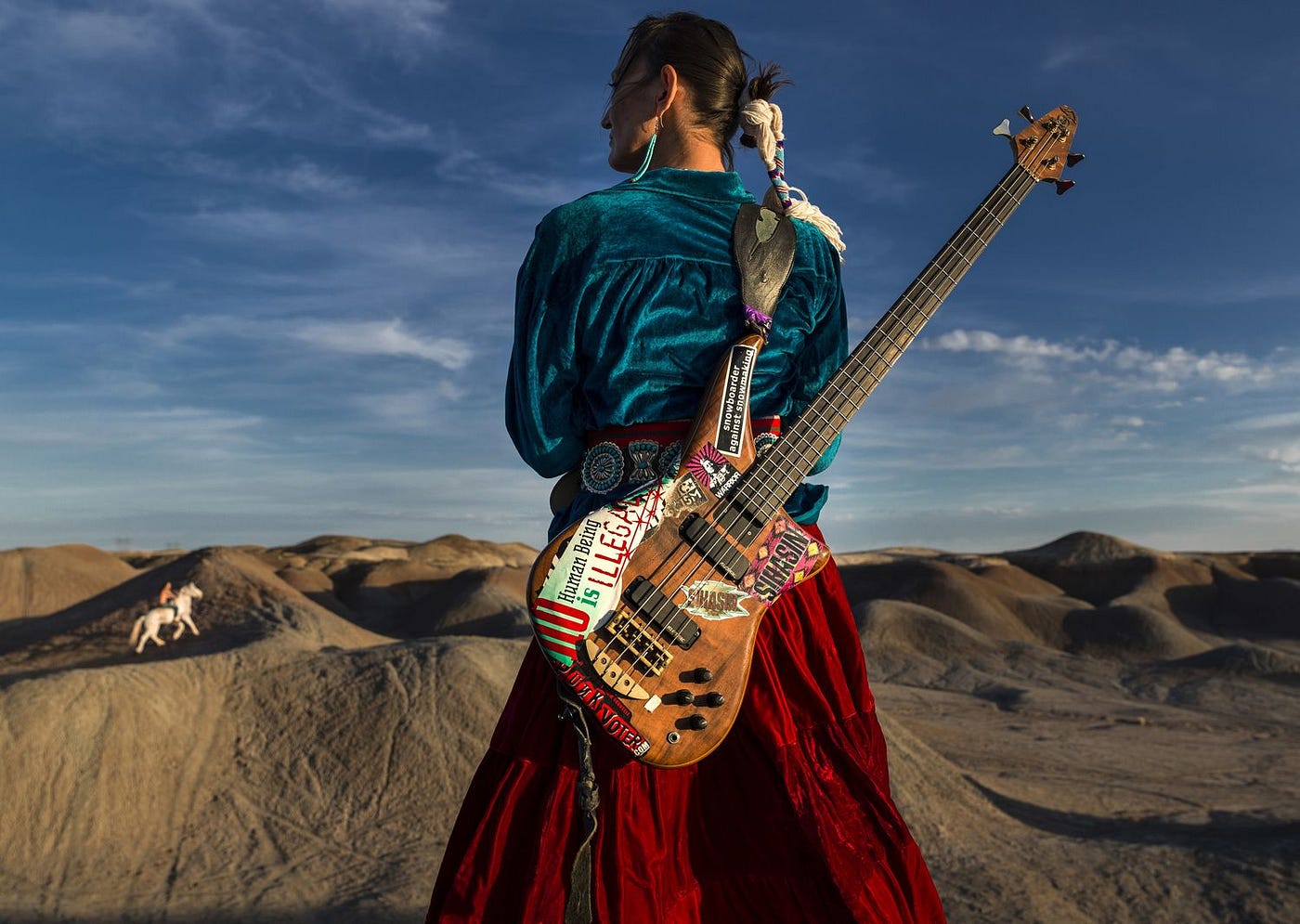
Western Music Seeking Native Music
“The Lakota Music Project, an initiative of the South Dakota Symphony Orchestra, began as a ‘conviction’ of Delta David Gier, music director of the symphony. Just six months after he started that role in 2004, he began to think about the community that the symphony served.
“Gier eventually started conversations with Lakota musicians across the state with the help of [Barry] LeBeau. That led him to Melvin Young Bear, of the New Porcupine Singers, a drumming group from the Pine Ridge reservation” (qtd. in South Dakota News Watch, September 10).
Lakota Music Project Shared Vision Tour, promotion video, 2025.
The realization of this project, a cross-cultural work between a Western symphony and a traditional Native drum group, would be realized in 2007 under what Gier notes as “awkward” conditions.
“There was a pivotal moment of a snowy evening in March in Pine Ridge. It must’ve been about 2007, and it was our principal string quartet, our principal woodwind quintet, and the New Porcupine Singers,” Gier said. “It was really awkward, like, ‘What are we doing here?’ But we just started playing music for each other. Then (Young Bear) said, ‘Our hope is that we will pass on this tradition to the next generation.’ I said ‘Bingo. That’s exactly what we do, too” (qtd. in South Dakota News Watch, September 10).
The Lakota Music Project began its first tour of local reservations in 2009. The Creekside Singers have worked on this project since the beginning.
“‘If we focus solely on our differences, we will probably never get along. So we have to focus on our similarities and how we make this work and how we do it in a positive way,’ [Emmanuel] Black Bear said” (qtd. in South Dakota News Watch, September 10).
The difference in musical styles has had to be negotiated. The Lakota Music Project continues to expand its reach to educational institutions.
“The program’s tour [2025] will take the music to six locations in South Dakota, three of which are on reservations: Sinte Gleska University on the Rosebud Indian Reservation, Wagner Community School on the Yankton Indian Reservation and Lakota Tech High School on the Pine Ridge Indian Reservation” (South Dakota News Watch, September 10).
The importance of connecting to younger generations is central to Native culture and is noted by Emmanuel Black Bear, lead singer for the Creekside Singers.
“The performances at schools will be particularly meaningful to Black Bear, whose role as drum keeper requires that he not only protect the sacred drum but the tradition of Lakota music itself. He frequently works with youth programs to pass on critical cultural skills and ideals” (South Dakota News Watch, September 10).
It’s the closing comments by Emmanuel Black Bear that prompted deeper thought on this project and how it relates to contemporary Native music.
“If my people can see the message, we’ve done it,” Black Bear said. “If non-Native people can see the message or hear the message, we’ve also accomplished what we’re setting out to do” (qtd. in South Dakota News Watch, September 10).
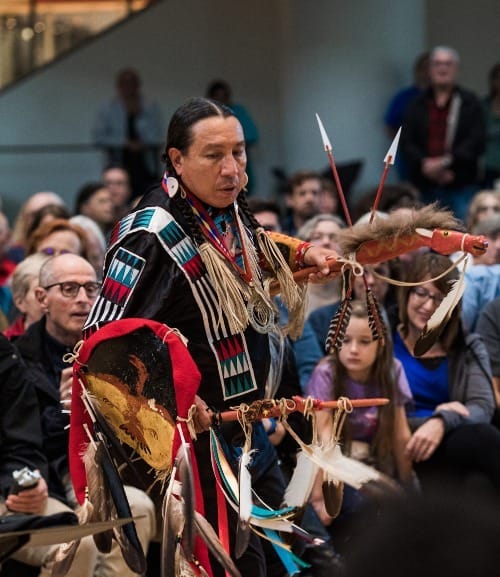
Expanding Tribal Discourse
I’ve extensively written elsewhere about the importance of Native/Indigenous Hip Hop. In my book, “See No Indian, Hear No Indian, Don’t Speak About The Indian,” I have a chapter discussing the importance and cultural necessity of Native Punk. Framing the argument on the work of Blackfire and Ethan 103, I argue for how punk serves contemporary Native discourse to create an active epistemology of decolonization, conscious tribal identity, self-determination, and sovereignty.
The Lakota Music Project presents a useful direction in expanding the visibility of Native music. However, binding Western European music with traditional singing/drumming can be seen as an older approach to communicating the value and importance of tribal culture and contemporary Native identity. Taking the work to Native educational centers is a credible next step, but one that could have been explored earlier on.
The Lakota Music Program, under the direction of Delta David Gier, has been wise to include tribal centers in its tours. However, the arch of this project remains centered on a Western music ideology. To give serious credit to Native music, the inclusion needs to be more than an appendage. Granted, the Lakota Music Program has worked tirelessly to make the collaboration an honest collaboration. But are non-Native audiences seeing this connection? Are Native audiences going to symphony halls to listen to performances? Or are both camps remaining localized with minor interaction?
This is the entry point for contemporary Native music, generated by Native musicians who speak to, about, and from a position of tribal consciousness. Operating outside of a reified “other” or as a token extension of Western European musical hegemony, contemporary Native music expresses a strong voice of decolonization, community inclusion, tribal consciousness, and activism. To explore this point further, I turned back the playlist to unearth tribal music as resistance, prominent vernacular, tribal centered lyrics, consciousness, and activism. The result was a return to the hallowed halls of Native punk.
Screaming Tribal Discourse: The Tribal Yell
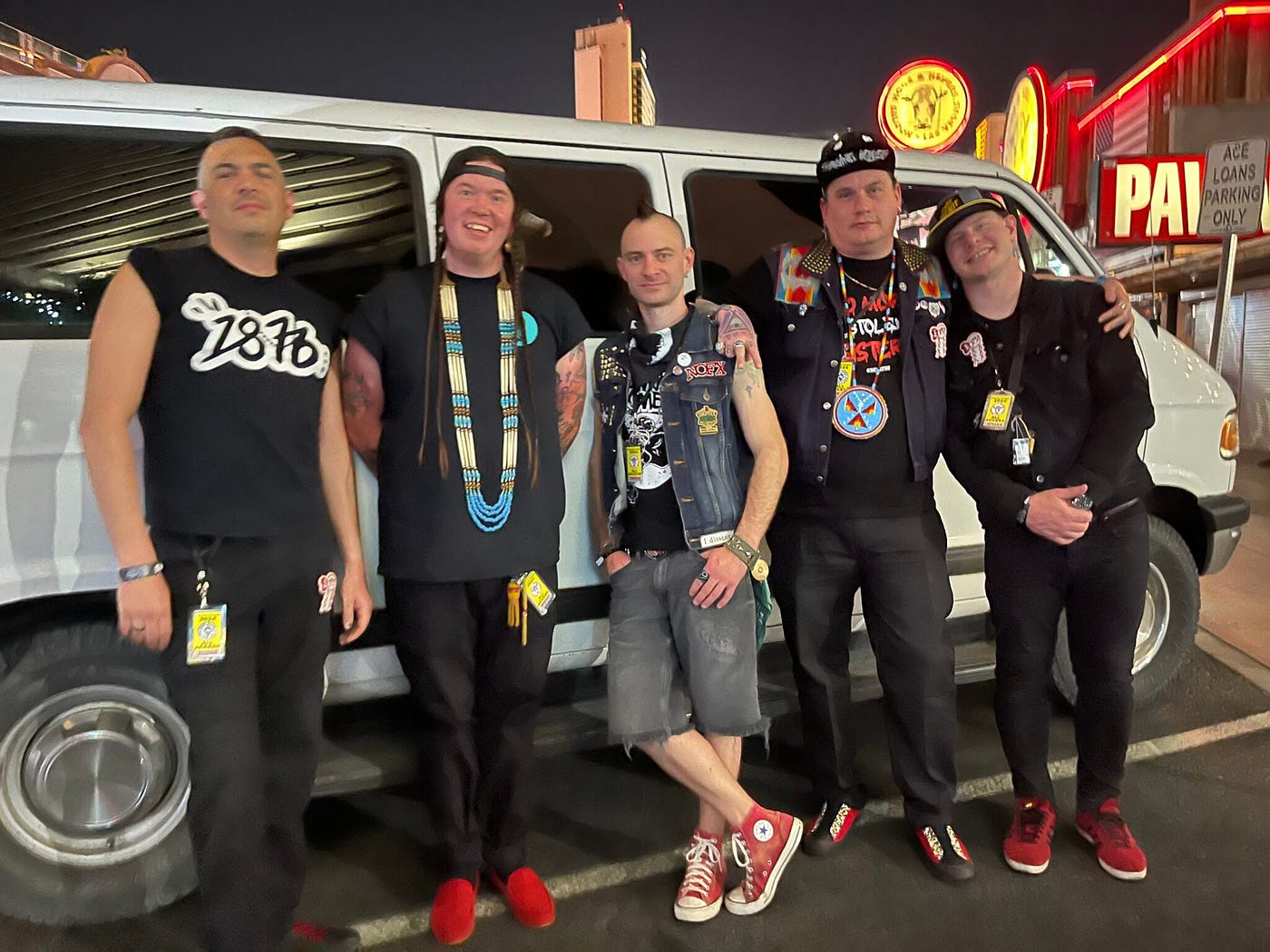
The abundant wealth of Native punk bands currently creating, performing, and touring is a testimony to the genre and its value for Native identity. I’ve elected to present the works on the Native punk band 1876. Their work exemplifies what I’ve coined as the “Tribal Yell,” conscious Native discourse that talks back to socio-political hegemony from a Native decolonial position. This critical tool allows for expanded use and integration across multiple Native-centered artistic expressions. As my work focuses on music, specifically Native/Indigenous musics (Hip Hop, Punk, Rock, Alternative, etc.), the “Tribal Yell” serves to deconstruct music through a Native/Indigenous critical epistemology.
Contemporary Native music as agency is founded on four elements:
- Community
- Native/Indigenous/Tribal centered lyrics and consciousness
- A core Message founded on Native/Indigenous/Tribal history and identity
- Activism across social, political, traditions, cultures, customs, knowledge, expressions, environment, and socio-religious/spiritual articulation
These elements frame how contemporary Native music is realized, presented, and absorbed by Native and non-Native communities. Collectively, these foundational elements articulate a dynamic decolonial agency for Native/Indigenous People. The application of these foundational elements for Native/Indigenous music can be, and should be, applied to all genres of music. Native punk, I argue, expresses these foundational elements with the ability to speak to multiple tribal generations and localities (reservation and urban).
The Native punk band 1876 presents their work in an unapologetic manner, founded on visual and sonic Native realities. The lived experience that 1876 profiles speaks to a Native current culture while opening a dialogue for non-Native audiences to listen to a conscious Native voice.
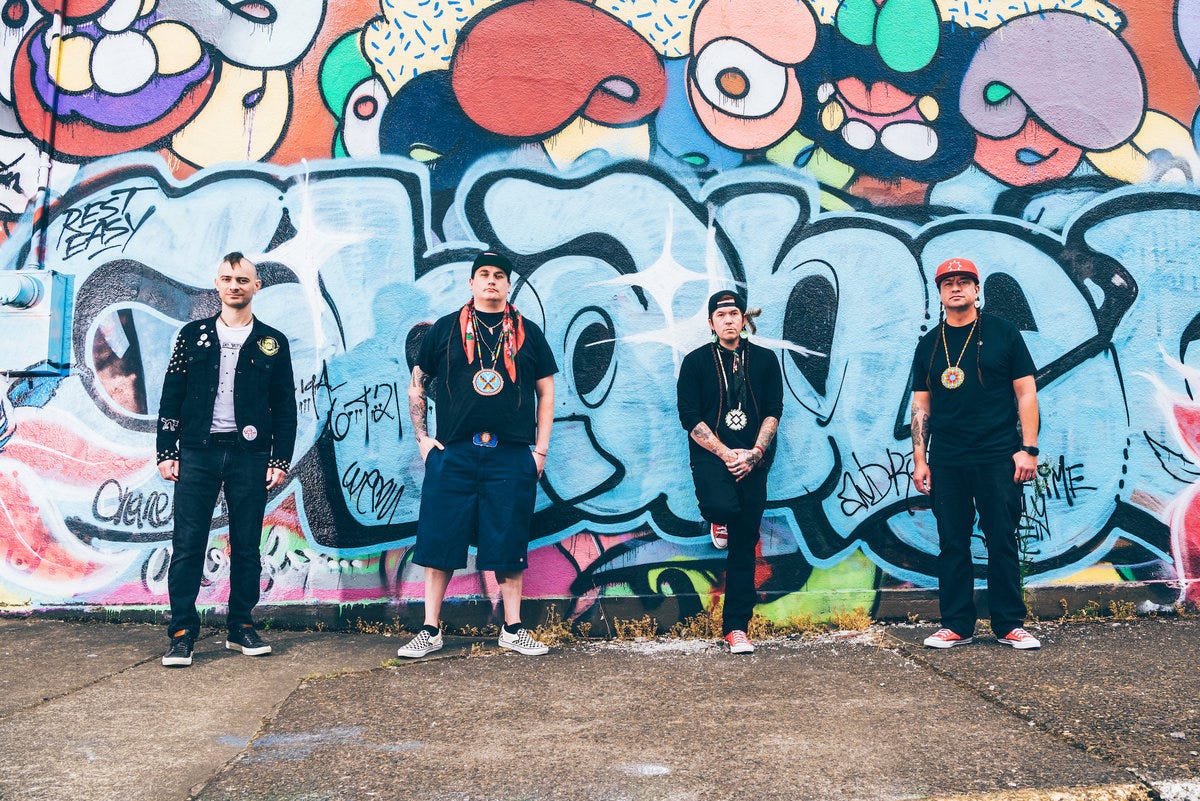
Performing Decolonization
1876 has quite a large ouvere. The overarching structure of their work brings together good old fashioned punk elements with a scathing critique on the American pop culture psychological stereotype of Native People and Native/Indigenous identity. Incorporating powwow drums and hand drums, covering popular powwow songs, the use of powwow dancers aid in outlining the cultural context of the band’s videos.
The band comfrotably wears the “punk uniform” (black, leather, jeans, spikes, mohawk haircut, etc) with Native signifiers (feathers, beaded mandalas, tribal images, etc). Native consciousness is firmly presented. The language, content, and reference to tribal history used by the band starts with their name, “1876,” referencing to an important point in their trbes history and following along the Indian Relocation Act (IRA), and extends through song titles and lyrics. Videos take place anywhere from clubs to rural locations and reservations. Each of these elements codify the foundations of contemporary Native music with, in this case, the sounding expression being punk.
1876 promotes a performative expression of decolonization. Engaging the foundational elements, codifying tribal expressions, capitalizing on the energy and angst of punk, 1876 works beyond a limited resistiance mode to endure a firm decolonial agenda. Taking advantage of punk’s DIY (Do It Yourself) attitude, 1876 aligns this with tribal self-determination and sovereignty which they express through their reading and expression of the foundational elements of contemprary Native music. Further, the discourse of 1876 speaks to both Native and non-Native punk audiences. One need not know the tribal history of 1876 to enjoy their music; their work stands on its own. This added layer of knowledge expands the importance of the band’s work and contributions.

Yelling Back And Speaking To
1876 follows the “Tribal Yell” epistemology. Their work “yells” back to racial stereotypes, bias, racist ideology, and termination psychology. 1876 speaks to a contemporary Native identity regardless of location, rural/reservation or urban. The band projects an activist discourse founded on decolonial application of Native/Indigenous conscious representations. Employing a non-Native music genre, punk, 1876 collects tribal history culture, customs, knowledge, expressions, traditions, environmental suppport and socio-religious/spiritual elements, 1876 yells across cultural divides while speaking to Native/Indigenous contemporary identity. Punk discourse is contextualized through a Native/Indigenous reading. The application of punk, by the 1876, is a “Tribal Yell” that welcomes voices to scream against hegemony to build and sustain the dynamic power of decolonization.
Selected Works
1876, We Will Remain (Official Video), posted April 2023.
1876, Tribes and Tribulations, posted October 2020.
1876, Great Escape (Official Video), posted March 2022.
1876, We Don’t Run, posted October 2020.
Alan Lechusza Aquallo
 alan lechusza aquallo
Leave a comment