An interesting article published by Native News Online (August 8) included the following headline,
“RFK Jr. Outlines Commitment to Native American Food Sovereignty; Shares Insights on Opioid Recovery and Whether or Not He would Ban Hot Cheetos on the Rez” (Native News Online, August 8).
The tagline is designed to catch attention, but prompted further analysis on the proposed 2026 federal budget relates to Native communities.
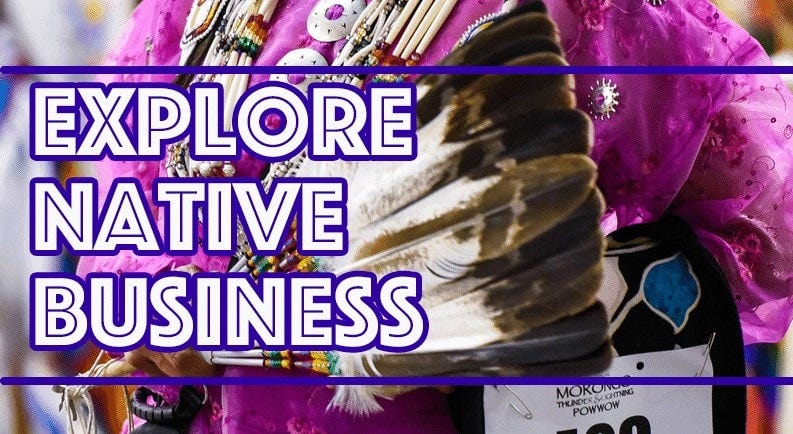
“The federal government proposed nearly $1 billion in cuts to programs for Native Americans in the 2026 budget, significantly impacting various services and initiatives” (Indianz.com, August 2025).
Key Cuts in the 2026 Budget
Bureau of Indian Affairs (BIA): The proposed budget includes a $700 million cut from BIA programs, which could reverse recent increases in federal investment in Indian Country.
Tribal Housing Programs: An additional $239 million reduction is proposed for tribal housing programs, further straining resources for Native communities.
Public Safety and Justice: The budget suggests cutting funding for public safety and justice programs at the BIA by $140 million, which could jeopardize the safety and security of Native communities.
Indian Health Service (IHS): While the IHS is set to receive a small increase, it still falls short of the funding needed to meet baseline health needs, indicating ongoing challenges in health services for Native Americans.
Elimination of Key Programs: The budget proposes the elimination of the Indian Loan Guarantee Program and significant cuts to the Community Development Financial Institutions (CDFI) Fund, which would see a 90% reduction in funding, impacting economic development initiatives.
“These proposed cuts represent a significant reduction in federal support for Native American communities, potentially reversing years of progress in funding and resources. The reductions could lead to decreased quality of life and increased challenges for tribal governments and their citizens, who already face systemic disparities in access to services and opportunities
“Overall, the 2026 budget cuts reflect a concerning trend in federal investment in Indian Country, raising alarms among tribal leaders and advocates for Native rights and resources” (Indianz.Com, August 2025).
The Common Rule: Acting Discrimination
[T]he ethical foundation of the Common Rule is drawn from the Belmont Report (Ryan et al., 1979). The Belmont Report breaks medical bioethics into three basic concepts: justice, autonomy, and beneficence…When considering AI/AN communities, the Belmont Report does not accommodate collective cultures, and it is based entirely on a European/Western concept of knowledge (Tsosie et al., 2019, qtd in Haozous et al, 2021).
This points to a focus on European/Western (read: American) values over Native culture, customs, traditions, knowledge, and expressions.
“[T]he importance of looking beyond the European…values that underpin the Belmont Report, there is nothing within the Common Rule that specifically instructs [agencies] to consult with community leaders, tribal members, or other cultural experts when working with AI/AN tribes (Adashi et al., 2018; Parker et al., 2019; Tsai, 2008; Williams et al., 2010)” (Haozous et al, 2021).
The reality of this is disturbing. Such common policy standards allow governmental agencies to employ policies (read: funding) to tribal entities without the inclusion of tribal community leaders, elders, or cultural advocates.
Haozous et al continue to work with supporting information from Beauchamp and Childress (2001).
“According to Beauchamp and Childress (2001), there are four concepts that guide modern medical bioethics: justice, beneficence, nonmaleficence, and autonomy” (Haozous et al, 2021).
Two important points to draw from this reference: 1. How tribal knowledge, customs, culture, traditions, and expressions are usurped for Western European understanding, and 2. There is nothing stated that requires federal officials to consult tribal communities or leaders when addressing issues, appointments, or funding allocation. Both of these points are visible in the management and overall support to tribal entities by the federal government. Together, these two points frame a colonial discipline related to the overall well-being, support, and representation of tribal entities; the colonization of bioethics.
Silencing The Indian Through Bioethics
I argue that bioethics is an inclusive representation of Native culture, customs, traditions, knowledge, and expressions.
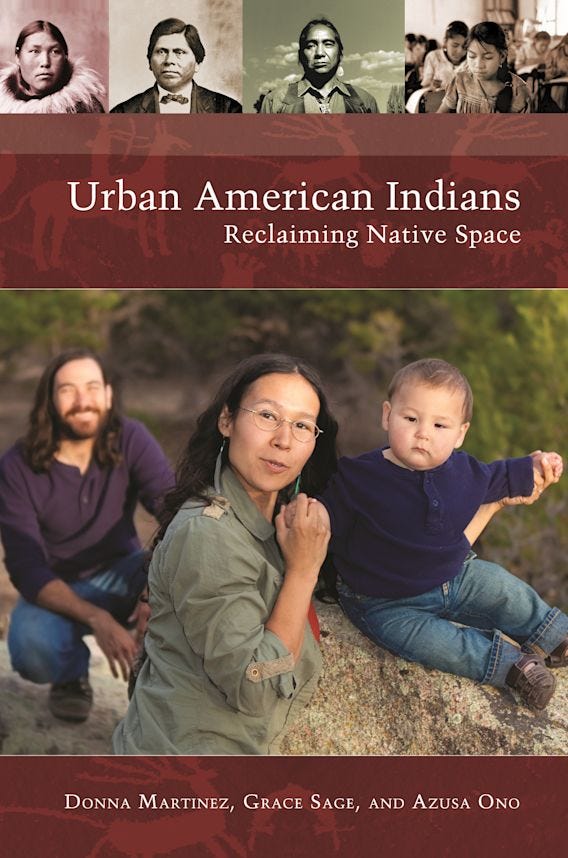
As bioethics, Native bioethics should be expanded to include how funding, job training, access, overall care provided, and the reporting and management of data are handled. Bioethics, as witnessed by the federal government, has been used to limit Native overall access to these elements regardless of the proximity of the Native person, reservation, or urban. More attention to this matter has been given to rural/reservation tribal communities than to urban Indians. Why? The transparency of urban Indians underscores a bias against Native People, which is articulated through limited funding, employment, and education access, and equitable overall health and wellness. The federal government and, by proxy, American pop culture operate with an unspoken assumption that Native People have either assimilated into American lower-middle class America or have “returned to the blanket” (read: living on the reservation). American psychology reifies Native People in a controlled history. It is more likely to be assumed that Natives living in a rural/reservation environment are below the poverty line and, thus, dependent on federal funding.
Neglecting the urban Indian population essentializes Native People to a codified position in time and space. The urban Indian population has grown to include 71% of the overall American Indian/Alaskan Native population. Given the majority of this Indian population, the inclusion of tribal bioethics is important to invert ongoing colonial discourse.

Funding And Business As Decolonization
Native News Online cites Secretary Kennedy (HHS) in his presentation of some growth in the coming 2026 budget for Native People.
“There is new funding to discuss. On Aug.1 the Senate overwhelmingly approved $8.2 billion to be spent this year for the federal food subsidy program WIC. It comes from the Military Construction, Veterans Affairs, and Related Agencies Appropriations Act that totals $27.1 billion in discretionary funding. It also includes $1.87 billion for the Agricultural Research Service and $425 million for SNAP” (Native News Online, August 8).
In light of the $1 billion being cut overall to Native resources and access to funding, this is an encouraging position. Exactly how these funds will be allocated has yet to be presented. The 2026 budget is not set to take effect until October 1, 2025. Given the operation of the federal government, any early indication of changes may not arrive until the budget is voted on and implemented.
“In Trump’s proposed [2026] budget, several reductions would directly affect Indian Country. One such proposal is a $617 million cut to Bureau of Indian Affairs (BIA) programs, including the Indian Guaranteed Loan Program and the Indian Land Consolidation Program” (Native News Online, May 2).
Along with the other financial cuts listed earlier, there is the potential for critical tribal agencies to shut down permanently.
“Most concerning to the economic development sectors of tribal nations is the proposed elimination of Community Development Financial Institutions (CDFI) Fund awards. The administration claims the program has been “abused to advance a partisan agenda,” and also proposes cutting $770 million in Community Services Block Grants. If enacted, the CDFI Fund would see a 90% reduction in funding — from its FY 2025 level of $324 million to just $33 million” (Native News Online, May 2).
Utilizing a Native bioethical application, Native businesses may direct attention to the areas that are at this point secure with funding obligations, health, and welfare. Taking advantage of the interest in food sovereignty, Native businesses may be interested in investigating how to negotiate with tribes to promote food sovereignty, health, and welfare programs by means of a Native bioethical application. In doing so, Native businesses can best align their working structure to foster a decolonial discourse.
Expanding the application of Native bioethics through business, Native companies can engage the urban Indian community through professional collaboration, education, and training programs, and the right of first hire to tribal members. An internal infrastructure can lead to the alignment of the urban Indian and reservation Indian communities. A business dialogue is established where goods and services are exchanged between these two community centers. This pathway can enlist other tribal businesses and agencies, which expands the dialogue. The overall structure is externally recognized as a decolonial expression.
Taking into serious account the proposed 2026 budget, Native People are again positioned to endure fiscal trauma from the federal government. The depth of these reductions is unprecedented. However, there are green areas to entertain. The use of a business dialogue, a pathway of goods and services between urban and rural Indian communities, framed by a Native bioethic, supports and promotes positive Native business relationships while decolonizing tribal identity.
Alan Lechusza
 alan lechusza aquallo
Leave a comment